
In our sampling room this week, a garment hung on a form, and I stood looking at it for a long time.
Nothing was wrong with it, exactly. The measurements matched the spec. The fabric was the one we approved. We'd already reviewed it in 3D, and on screen it looked right. But on the form, the hem sat a centimetre too low, and the shoulder read heavier than the render. I couldn't say why straight away. I just knew it wasn't right.
That moment, the pause before a decision, has survived every technology fashion has thrown at it. It will survive AI too.
A short history of new tools
Fashion has never been short on disruption. The paper pattern turned couture into something that could be copied and sold by the thousand. The sewing machine changed what a factory could be. CAD moved patternmaking from the cutting table to the screen. 3D sampling, the work my team does every day, let us review a garment before a single metre of fabric was cut. Now generative AI can produce a hundred colourways before a designer finishes their coffee.
Each shift was described, at the time, as the end of something. Each time, the industry got faster, cheaper and more global. And each time, the hardest part of the job stayed exactly where it was.
Tools compress the distance between an idea and an object. They have never decided which idea deserves to become one.
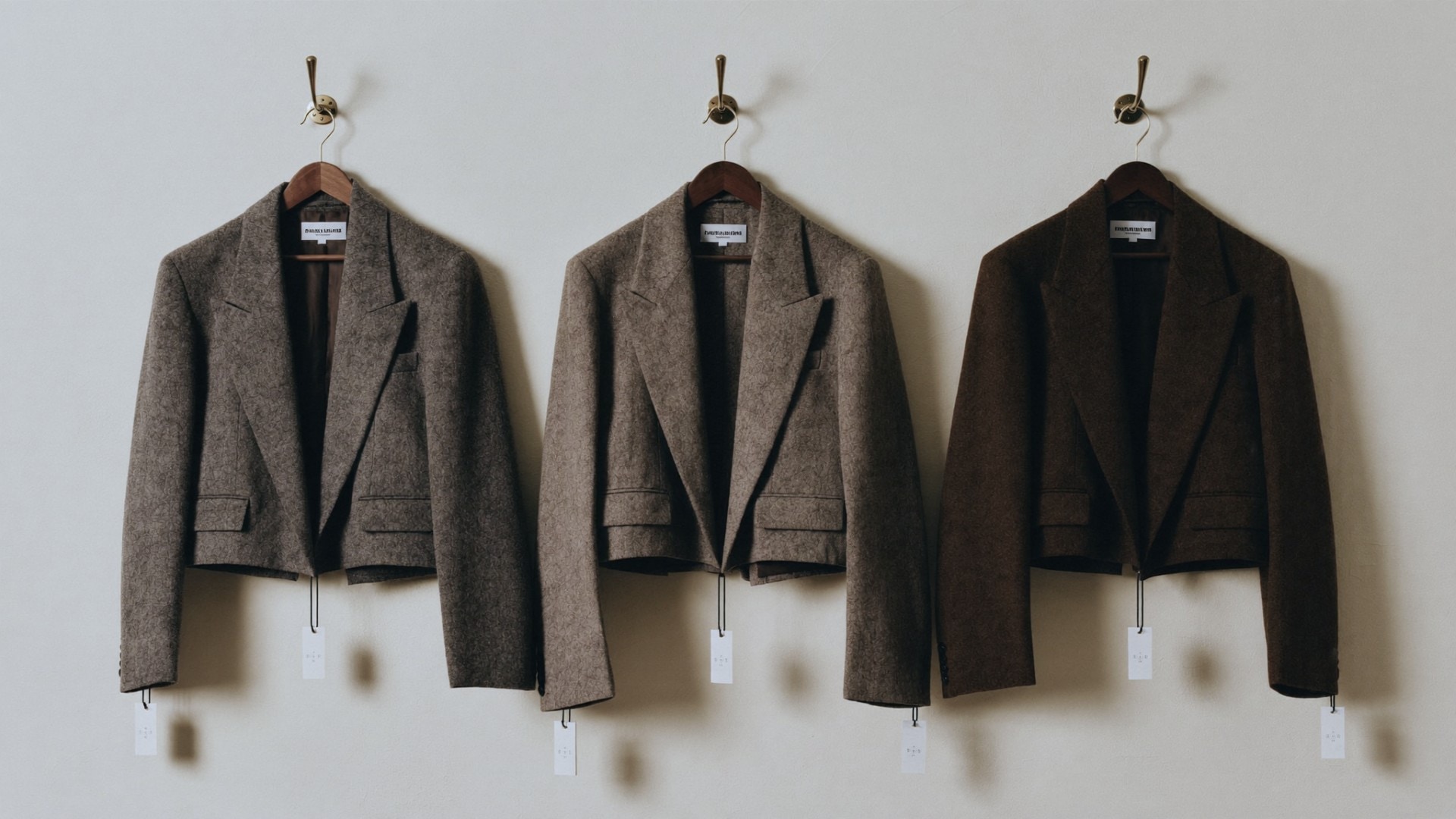
Proportion is still a judgment, not a calculation
Software can grade a pattern across twelve sizes in seconds. It cannot tell you that a cropped jacket that looks balanced on a size 6 starts to look like a mistake on a size 16. Nor can it tell you that the fix isn't a longer jacket but a lower button stance.
Proportion is relational. It depends on the body, the fabric, the way a garment moves and what the wearer is trying to say. A model can learn the averages. Good design usually lives just off the average, in the half-centimetre that makes a trouser look intentional rather than standard.
That half-centimetre is a decision. Someone has to make it, and someone has to own it.
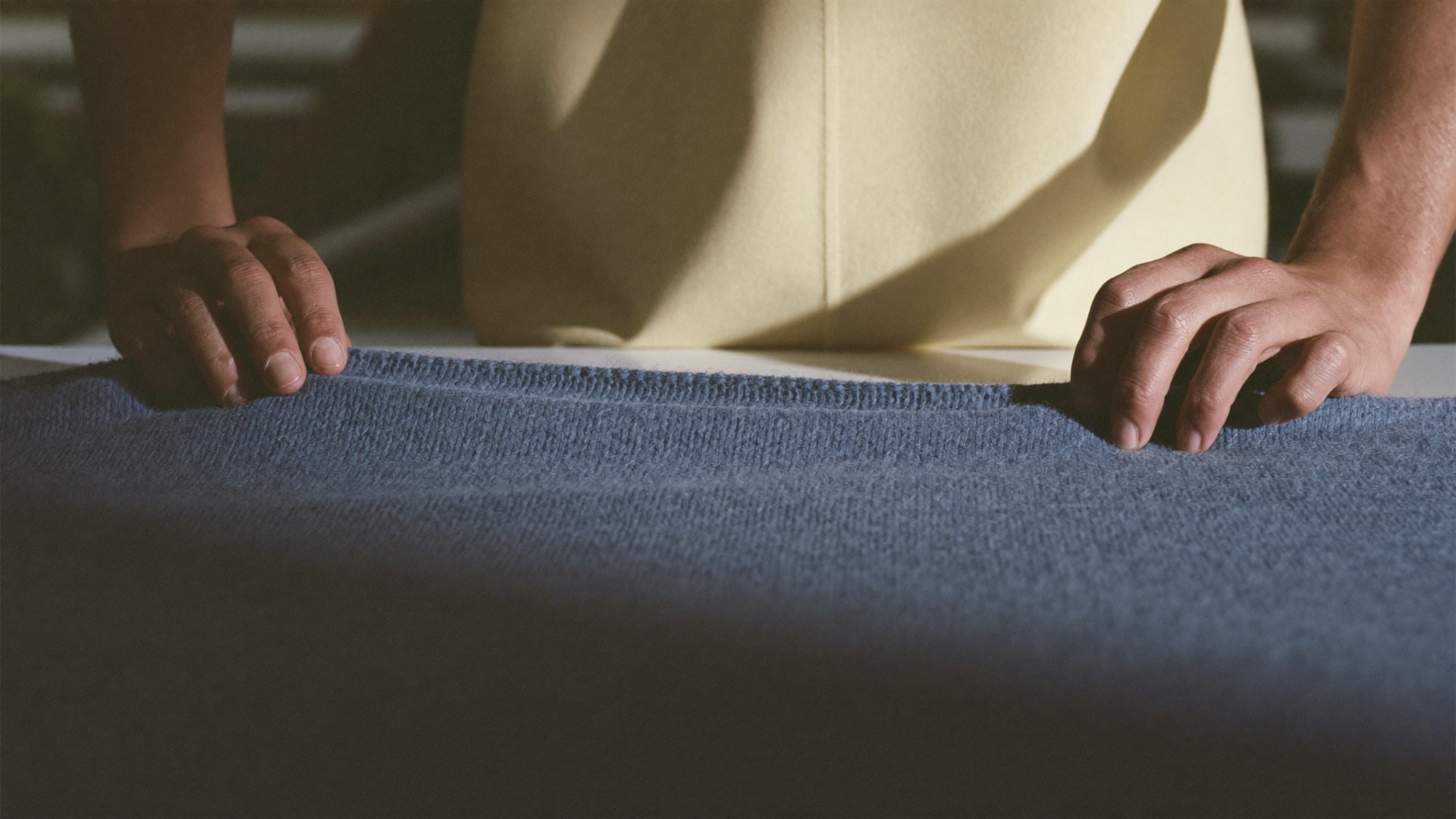
Material still has opinions
Everyone who works in 3D has a story about a fabric that simulated perfectly and behaved like a stranger on the body. Weight, drape, recovery, hand-feel, the way a colour shifts under store lighting. These are physical facts, and they don't negotiate.
One style taught us this the hard way. A basic legging had repeated for years, with only small tweaks in 3D each season. Then a designer switched to a new fabric, and the sample simply wouldn't fit at the waist. The fabric lacked stretch, so we had to revise the pattern, using more fabric at a higher cost.
Still, digital tools are getting better at simulating material. That matters: it cuts waste, shortens calendars and lets more ideas be tested. But a simulation is only as honest as the knowledge behind it. If a system doesn't understand how a fabric behaves after washing, it will render a beautiful garment that the factory can't make, or that the customer sends back.
The question isn't whether a tool can show you a material. It's whether it knows what that material will do.
"Who is this for?" is still the first question
The most expensive mistakes in fashion are rarely technical. They are mistakes of audience:
- A collection designed for a customer who doesn't exist.
- A fit block built around a body that isn't the brand's.
- A trend adopted because it was everywhere, not because it belonged.
AI is very good at answering questions. It is far less good at knowing which question to ask. "What's trending?" is easy. "What does our customer need from us next season that she can't find anywhere else?" takes empathy, context and taste, the accumulated memory of a brand.
No dataset replaces knowing who you're designing for. At best, it helps you see them more clearly.
So what actually changes?
If the core of good design stays constant, the real shift is in where we spend our time.
For decades, much of the job was translation. An idea became a sketch, the sketch a tech pack, the tech pack a sample. Then the loop repeated three or four times because something got lost along the way. Much of that work was necessary. Little of it was design.
The opportunity now is to shrink the translation and expand the judgment. That means fewer rounds of fixing avoidable errors and more time on the calls only people can make.
That only works if the tools carry real knowledge, not just images. A system that generates a striking silhouette but can't tell you whether it can be patterned, costed or produced isn't saving anyone time. It's moving the problem downstream. On the manufacturing side, I see where those problems land, and how much more they cost by the time they get there.
Why I'm writing this for StyTrix
That is why I care about how StyTrix is being built.
StyTrix starts from the belief that AI in fashion should be grounded in how garments are actually made. That means the construction logic, material behaviour and production constraints that pattern makers and factories have spent decades learning. Technology should take the friction out of the process. It should never take the thinking out of the design.
In practice, that means three commitments:
Designers decide. Tools inform. The job of the tool is to surface better options and clearer trade-offs, faster. The call stays with the designer.
Knowledge over novelty. An output that looks good but can't be made isn't progress. What matters is what reaches the factory floor.
Craft is the benchmark. The tools should be measured against what a skilled designer and technician would do, not against what looks impressive in a demo.
This blog is where we'll work through those ideas in public. We'll look at what AI is genuinely good at in fashion, where it falls short, and how teams can use it without losing what makes their work theirs.
The pause still matters
Back in our sampling room, that garment will get fixed. Maybe the hem moves up. Maybe the shoulder gets a softer fabric. Maybe, next time, better tools catch it a week earlier, on screen, before anything is cut.
But the pause will still be there. Someone will still look, sense that something is off and decide what to do about it.
Everything around that moment is changing. The moment itself is the job.